Read the argument underneath
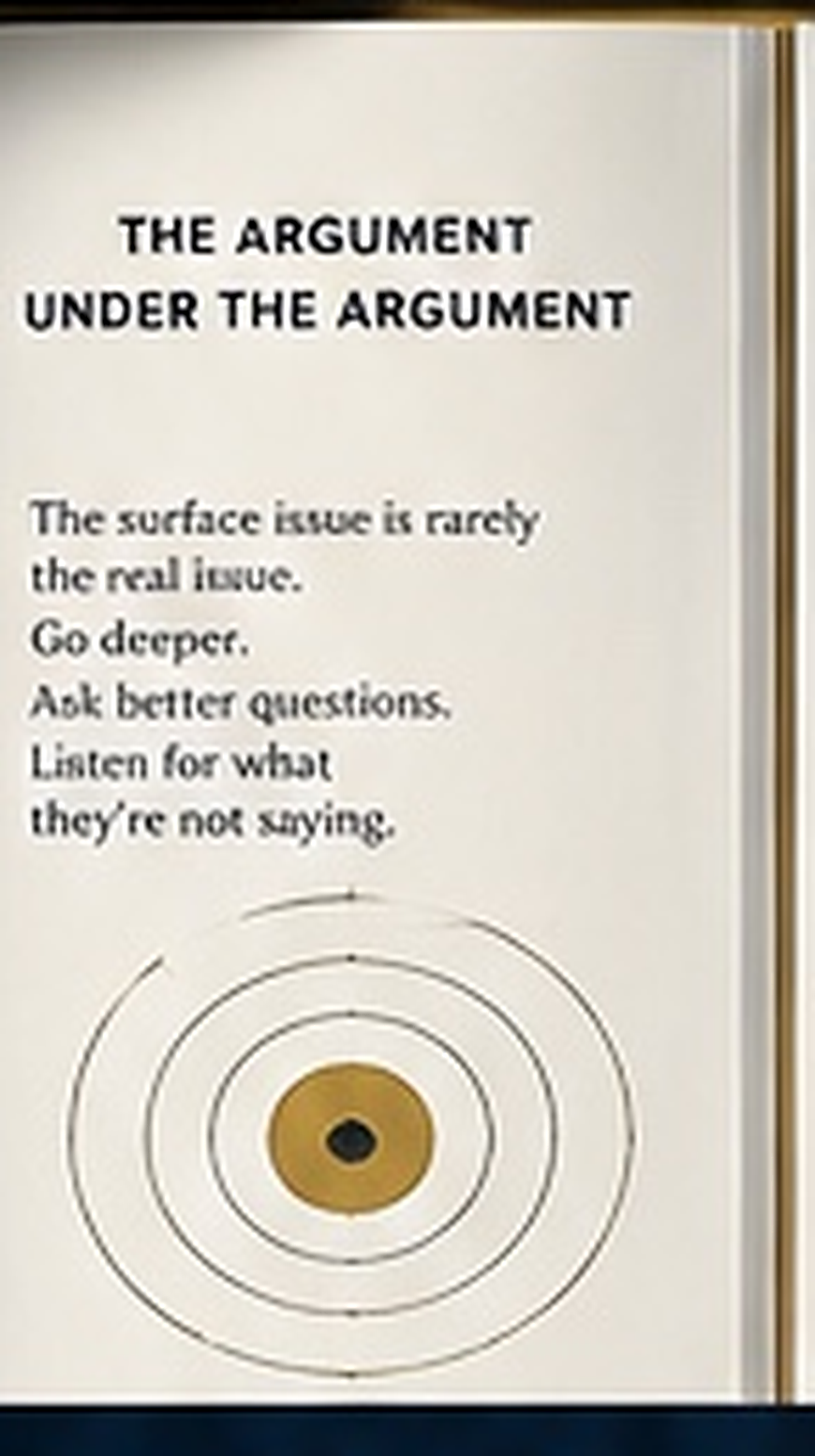
Move past the dishes, the text, the tone, or the holiday plan and identify the fear, shame, belonging, safety, rejection, or unmet need carrying the real emotional weight.
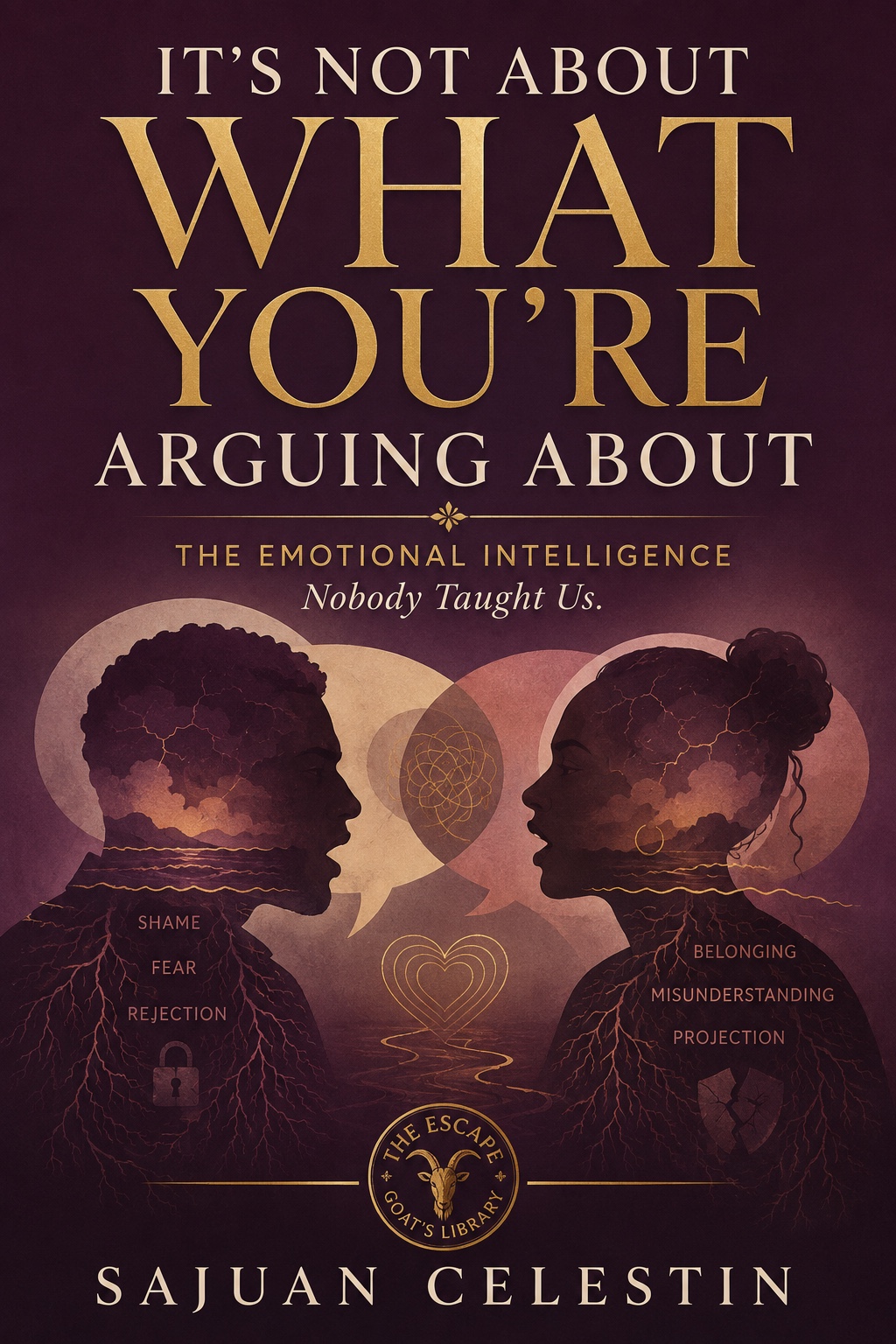
PERSONAL GOVERNANCE · ADVANCED MANUSCRIPT
The Emotional Intelligence Nobody Taught Us
The surface fight is often only the envelope. This book opens the letter.
A practical, sharply written guide to conflict literacy and relational discernment. It helps readers understand what is actually happening before deciding whether the next move is regulation, repair, documentation, a boundary, changed access, or an exit.
THE PREMISE
The book replaces reflexive certainty with emotional accuracy. Readers learn to tell the difference between being triggered and being harmed, between an explanation and an excuse, and between a difficult conversation and a dangerous pattern.
WHAT THE BOOK TEACHES
Direct, memorable distinctions turn emotional intelligence into something readers can practice in real conversations—not just admire as an idea.
Move past the dishes, the text, the tone, or the holiday plan and identify the fear, shame, belonging, safety, rejection, or unmet need carrying the real emotional weight.
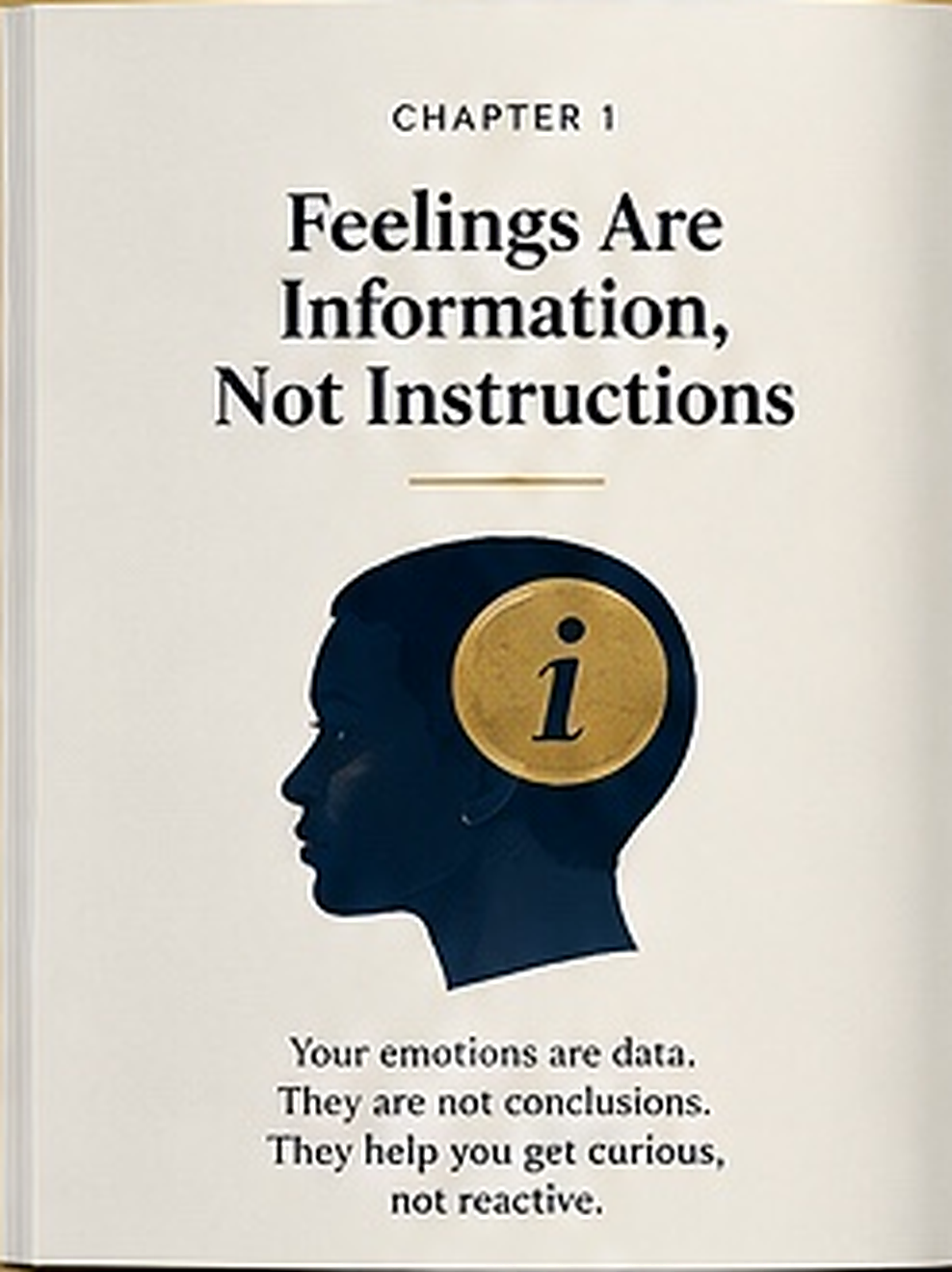
Feelings are information, but they do not automatically prove intent, mistreatment, or the story the nervous system added in the moment.
Learn to apologize, validate, repair, and own impact without accepting a totalizing verdict about your worth or character.
Distinguish ordinary conflict from control, discomfort from harm, and a repairable mistake from evidence that access needs to change.
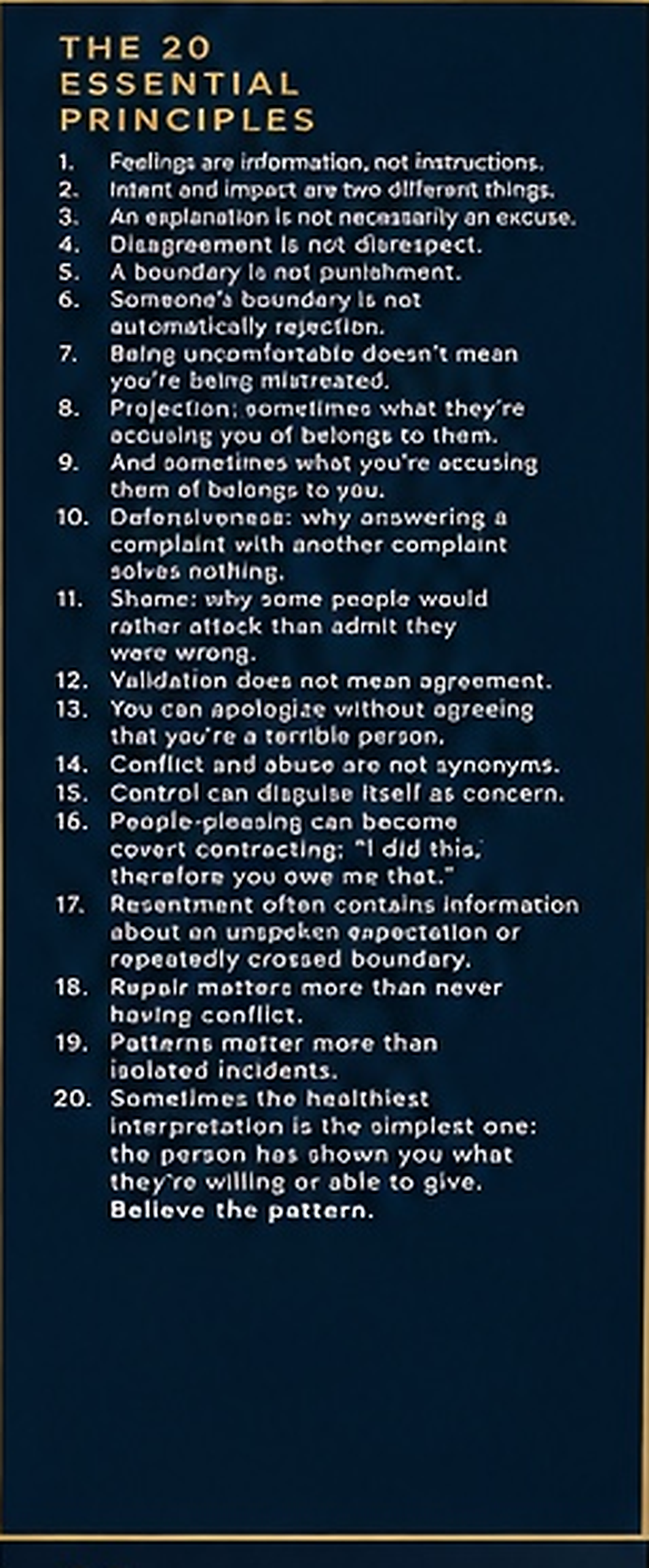
DEVELOPED MANUSCRIPT · TWENTY CHAPTERS
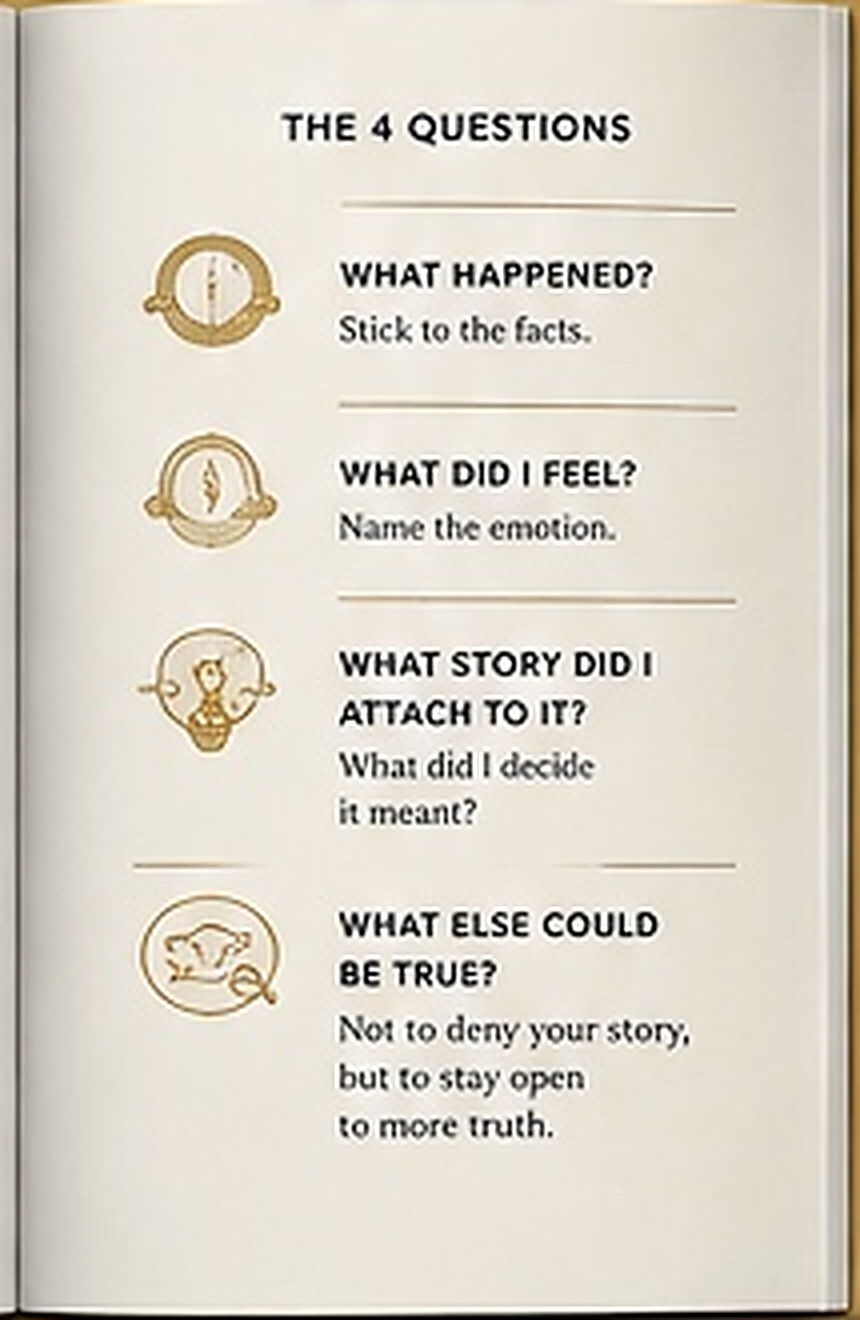
The manuscript does not stop at naming emotional patterns. Every chapter uses a repeatable field lens: see what happened, test what it means, study what repeats, and choose what the evidence supports.
Selected chapter examples only. The complete twenty-chapter table of contents, field lenses, appendix, and sample chapters are available privately to verified agents and editors.
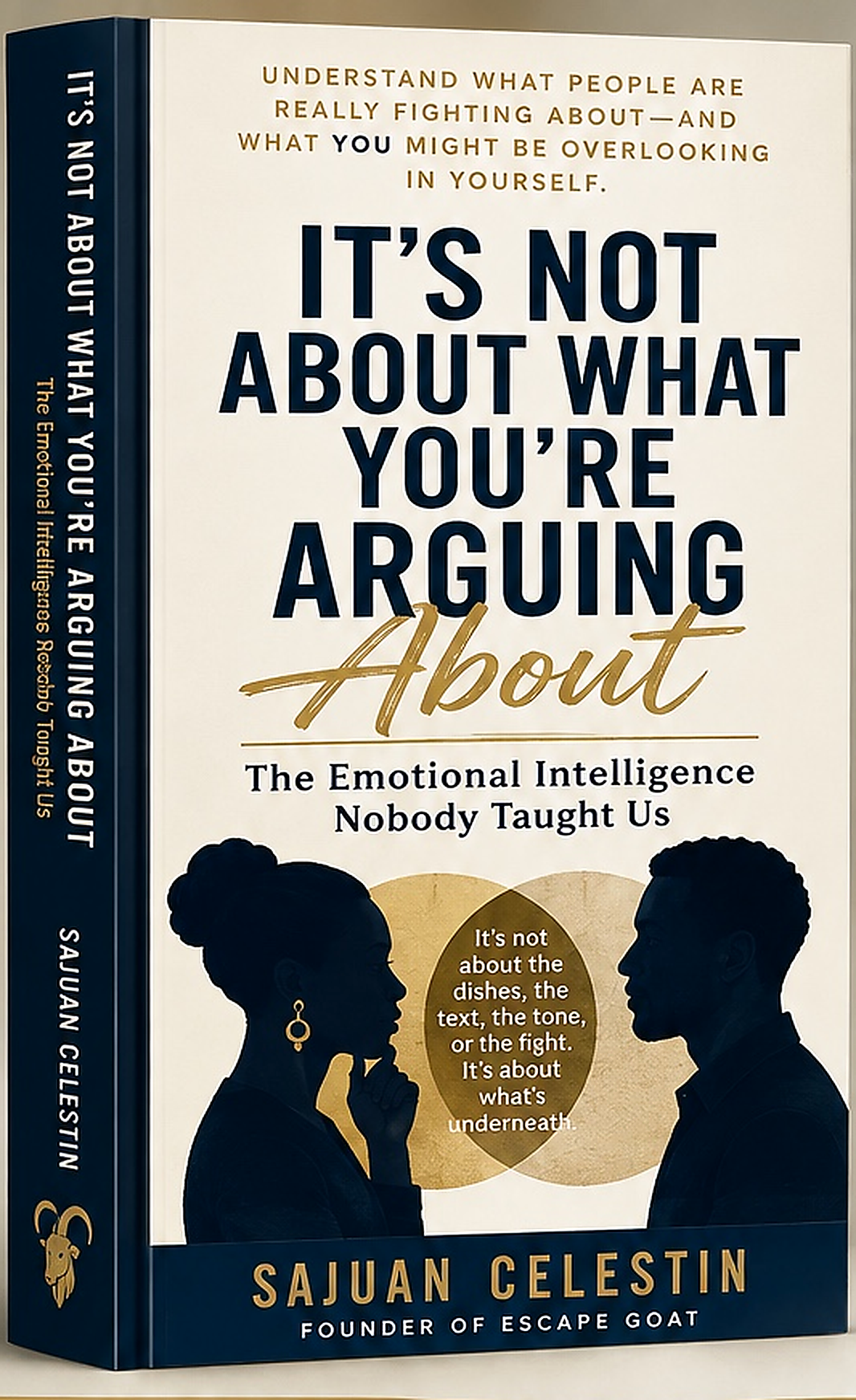
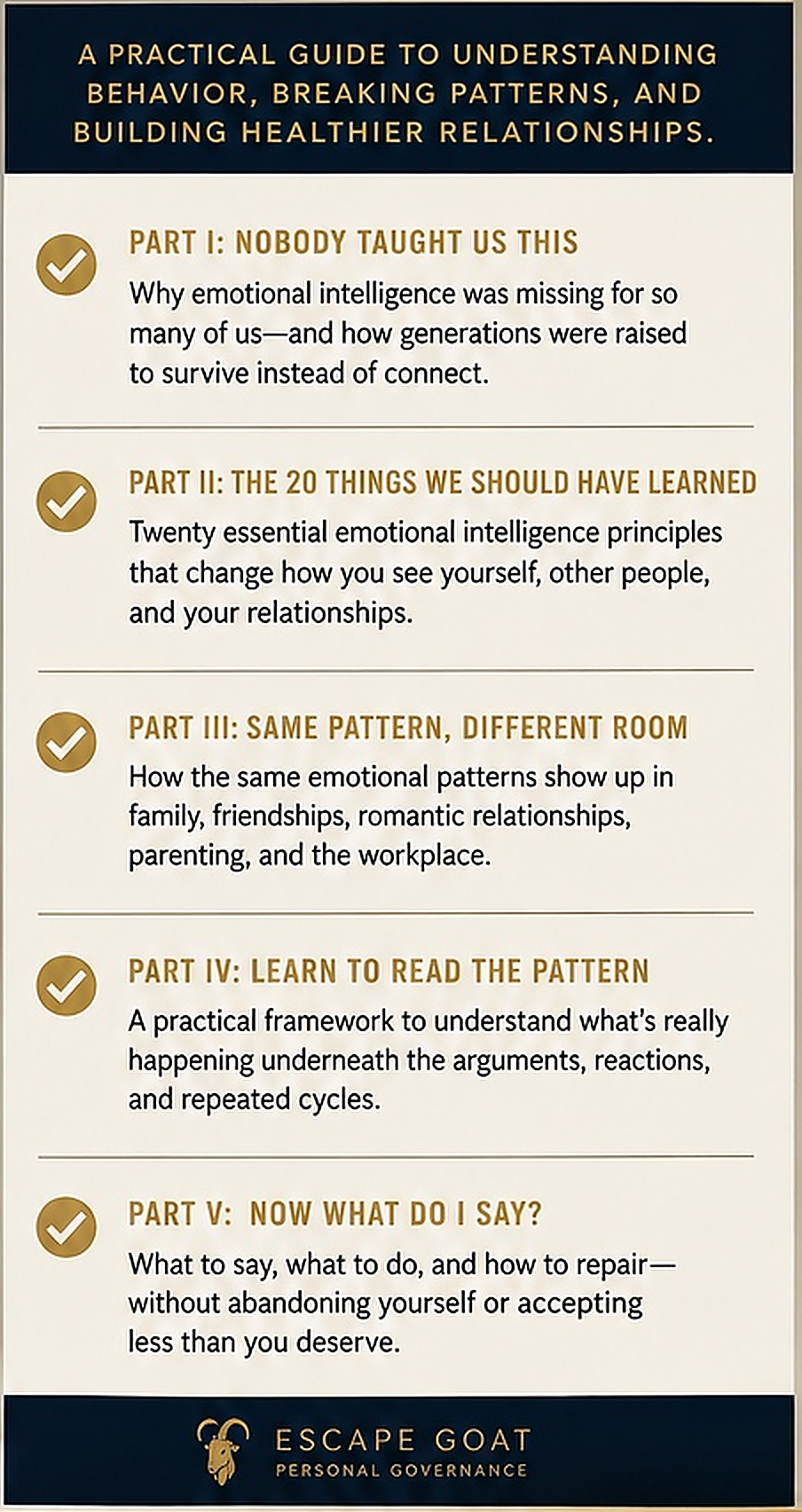
THE BOOK, MADE VISIBLE
The approved development board has been separated into individual visuals so agents and editors can study the structure, reader tools, interior concepts, and merchandising potential without opening a flattened collage. Select any page to view it full-size.


THE READER
Broadly useful relationship nonfiction with applications across romantic partnerships, families, friendships, and work.
“The emotionally intelligent response is not always the gentlest response. It is the response most grounded in reality.”
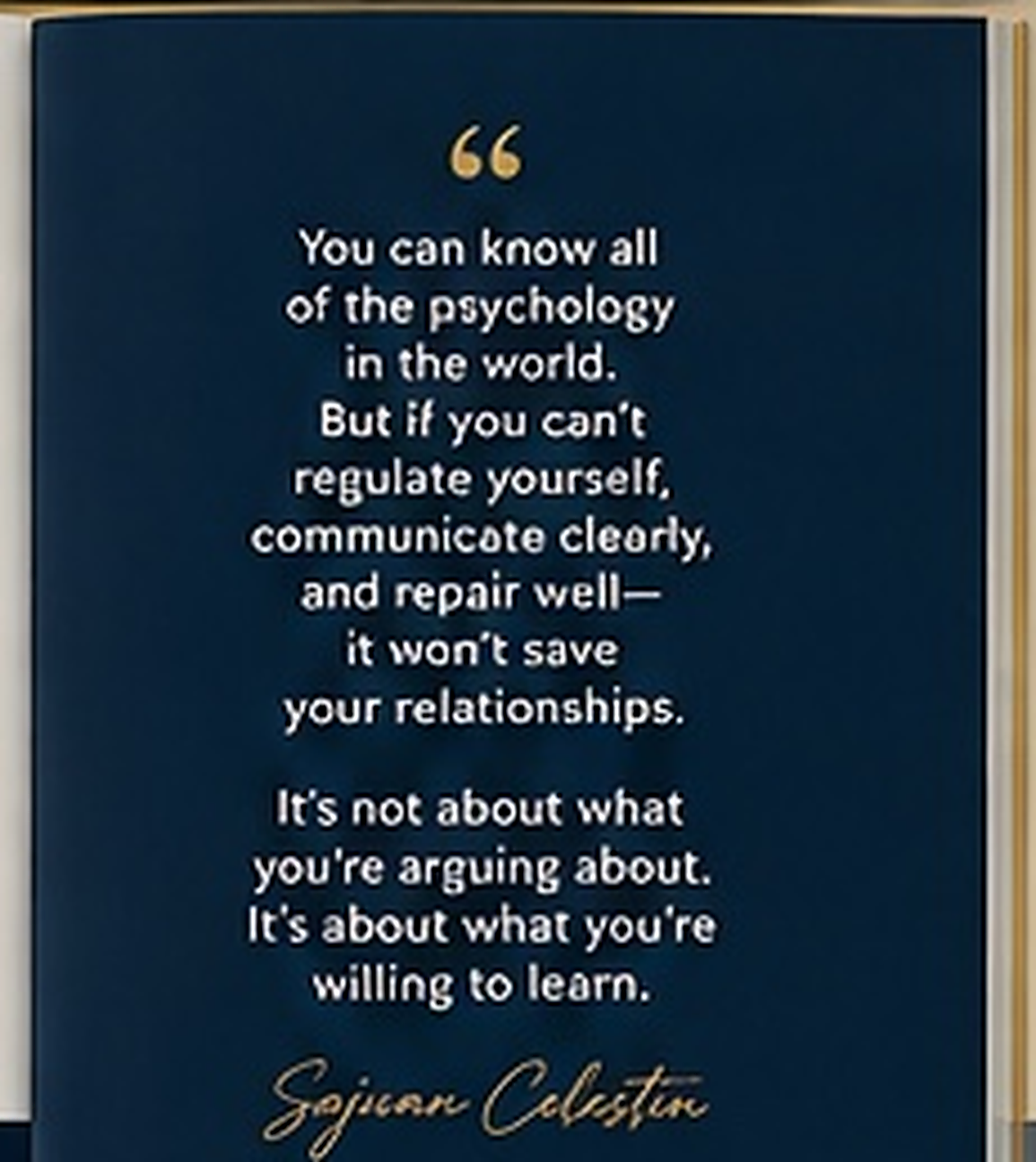
IT’S NOT ABOUT WHAT YOU’RE ARGUING ABOUTADVANCED MANUSCRIPT
Representation, editorial, and rights conversations for this project are welcomed through Sajuan’s agent-facing catalog.