The compliment can be a cover story
Calling Black women strong, resilient, or magical can sound like admiration while hiding the labor, strategy, sacrifice, and unequal conditions that made extraordinary performance necessary.
CULTURAL CRITICISM · IN DEVELOPMENT
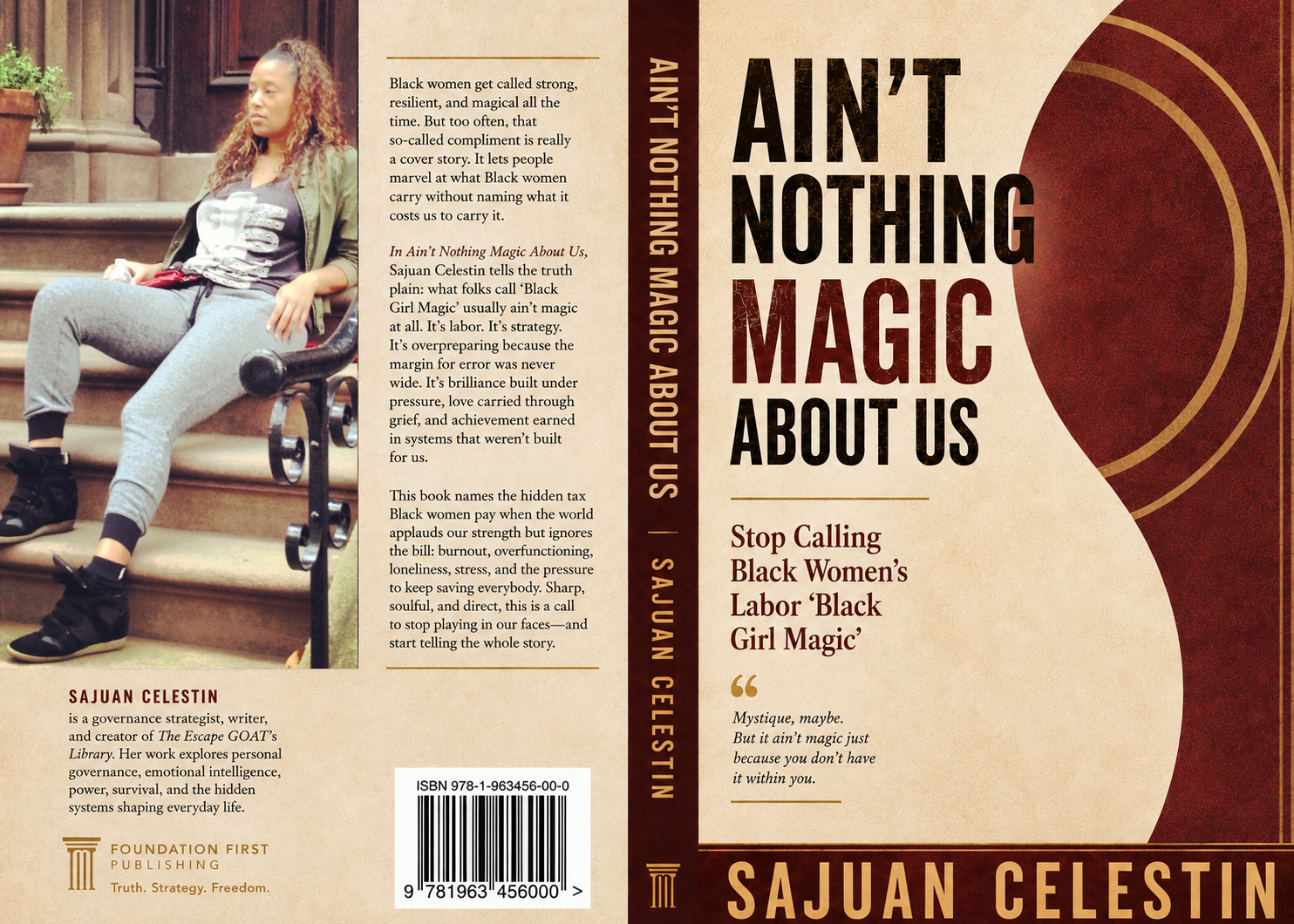
Stop Calling Black Women’s Labor “Black Girl Magic”
Mystique, maybe. But it ain’t magic just because you don’t have it within you.
Black women get called strong, resilient, and magical all the time. Too often, that praise is really a cover story. It lets people marvel at what Black women carry without naming what it costs us to carry it—or changing the systems that keep placing the weight there.
THE PREMISE
Ain’t Nothing Magic About Us names the hidden tax behind a beloved cultural phrase. Sharp, soulful, and direct, it moves the conversation from applause to accountability—and from celebrating endurance to changing the conditions that demand it.
WHAT THE BOOK EXPOSES
The book combines cultural criticism, lived experience, workplace authority, and personal governance to explain why the myth persists—and what real support would require instead.
Calling Black women strong, resilient, or magical can sound like admiration while hiding the labor, strategy, sacrifice, and unequal conditions that made extraordinary performance necessary.
The myth celebrates the save while ignoring the cost: burnout, loneliness, chronic vigilance, emotional labor, stress, grief carried in silence, and the expectation that the same woman will rescue everybody again.
What looks effortless is often overpreparation built under pressure. The book names the systems that reward Black women’s competence while denying them softness, support, ordinary mistakes, rest, and protection.
The answer is not a better slogan. It is redistribution, accountability, boundaries, fair compensation, shared responsibility, protected rest, and the right to be fully human instead of permanently heroic.
EDITORIAL ARCHITECTURE IN DEVELOPMENT
The current structure gives the argument somewhere to travel: from a recognizable cultural phrase, through its hidden personal and institutional costs, toward material changes in labor, leadership, protection, compensation, rest, and shared responsibility.
Why praise for strength and magic can hide the labor, overpreparation, and lack of protection underneath the performance.
The personal cost of burnout, emotional labor, chronic vigilance, rescue roles, and brilliance treated as an endlessly renewable resource.
Who receives praise, protection, compensation, credit, support, and room for ordinary mistakes—and who is expected to absorb the difference.
What replaces the slogan: redistribution, shared responsibility, fair compensation, real protection, and the right to softness and rest.
The complete proposal, chapter map, sample chapters, original examples, and workshop extensions remain private for verified representation and rights conversations.
THE READER
A trade-facing cultural argument with a deeply personal center and clear relevance across relationships, work, leadership, health, money, caregiving, and community.
THE COMMERCIAL POSITION
Immediate recognitionThe title challenges a familiar phrase and creates a clear, provocative promise before the reader opens the book.
Expandable platformSpeaking, media, ERG programming, leadership workshops, book-club materials, essays, and workplace tools.
Author authoritySajuan writes from the intersection of Wall Street governance, Black womanhood, survival, pattern recognition, documentation, and the refusal to romanticize preventable harm.
“Stop marveling at what Black women can carry. Start asking why the weight keeps being handed to us.”
AIN’T NOTHING MAGIC ABOUT USCULTURAL CRITIQUE IN DEVELOPMENT
Representation, editorial, and rights conversations for Ain’t Nothing Magic About Us are welcomed through Sajuan’s agent-facing catalog.